
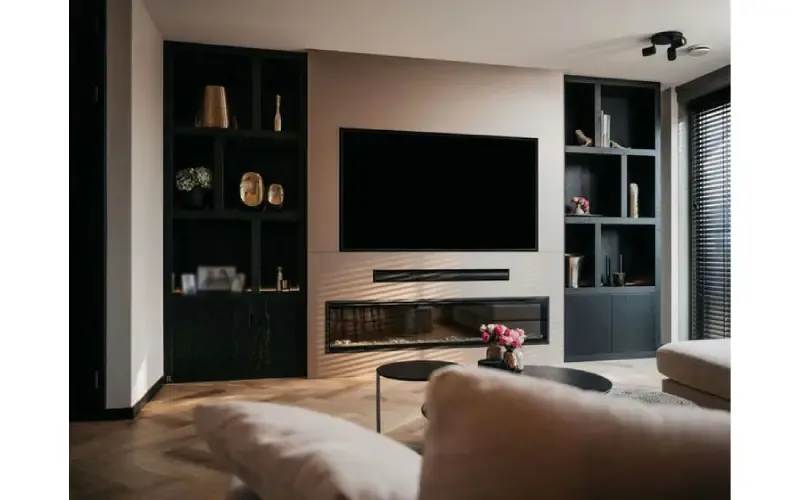
When setting up a media wall in a small room, it’s important to keep things balanced and not overcrowded. A good rule of thumb is to add about an inch of space on each side of the TV plus around 7.5 inches for the media wall structure itself, which helps keep everything proportional. Go for flush-mounted designs with flat fronts and avoid bulky cabinetry to save space while maintaining style. Textured details like shiplap or stone accents add character without making the room feel cramped. Also, using vertical slats or floating shelves can create visual interest and keep the area feeling open and functional.
Ideal Media Wall Width for Small Rooms
Media Wall Installation in a small room, it’s important to size it correctly. The best way to calculate the ideal width is to add 1 inch of space on each side of your TV plus 7.5 inches of media wall structure on each side. For example, if you have a 55-inch TV that’s about 49 inches wide, aim for a media wall unit around 66 inches wide. For a 65-inch TV (57 inches wide), a 74-inch wide unit works well, and for larger sets like 75-inch (66 inches wide) or 85-inch (75 inches wide), plan for 83 and 92 inches wide units respectively. This approach prevents the media wall from feeling too large or cramped, preserving open space and making the wall look clean and symmetrical. If you’re adding vertical slats or special paneling, you might want to adjust the side structure slightly for even spacing, but sticking close to these guidelines ensures your media wall won’t overpower the room or feel awkwardly sized.

Keep It Flush and Functional
For small rooms, a flat-front media wall design helps keep the space feeling open and uncluttered. Mounting the TV flush with the wall minimizes depth, which is crucial when every inch counts. Consider stacking a recessed fireplace below the TV to create a sleek vertical element that adds warmth without taking up extra floor space. Avoid deep cabinets or bulky base units, as these can quickly crowd a narrow room. Instead, use a simple wood mantel to introduce a natural touch without adding bulk. Keeping hardware minimal or hidden maintains clean lines, while floating shelves or mantels offer functional storage or display areas without encroaching on the room’s footprint. Using neutral or light colors enhances the open feel, and hiding all electronics and cables ensures a tidy, distraction-free appearance. This approach maximizes style and function, making it ideal for compact spaces where maintaining a clean, streamlined look is key.
- Choose a flat-front media wall design to keep the space open and uncluttered.
- Mount the TV flush with the wall to minimize depth.
- Stack a recessed fireplace below the TV for a sleek vertical element.
- Avoid deep cabinets or bulky base units to save floor space.
- Add warmth with a simple wood mantel that doesn’t add bulk.
- Use minimal hardware or hidden storage to maintain clean lines.
- Use neutral or light colors to enhance the open feel.
- Keep all electronics and cables hidden for a tidy appearance.
- Floating shelves or mantels can add function without crowding.
- This style fits well in narrow or compact rooms where every inch counts.
Add Texture Without Bulk
In small rooms, adding texture to your media wall can bring warmth and character without taking up valuable floor space. One simple way to achieve this is by using shiplap paneling around the TV and fireplace. Whether you choose horizontal or vertical shiplap, it creates a subtle depth that doesn’t add thickness to the wall. Keeping the paneling thin ensures it won’t overwhelm the space, and using light or neutral paint colors helps maintain brightness. Pairing shiplap with a stained wood mantel adds a cozy, natural touch that complements the clean lines of the media wall. Avoid heavy trim or molding that adds unnecessary visual weight. A well-spaced, consistent shiplap pattern also gives a polished, custom look while helping to hide wiring or wall imperfections. This approach enhances the style of your media wall while keeping it lightweight, simple, and perfectly suited for small spaces.
Go Vertical with Bold Accents
Using vertical slats or paneling on a media wall is a smart way to draw the eye upward, making small rooms feel taller and more open. A tall, narrow media wall fits perfectly on slim walls, saving horizontal space while adding visual height. Opt for black or dark-colored vertical slats to create a bold statement that remains space-conscious. To keep the design clean and balanced, maintain even spacing between slats and avoid wide panels that lessen the vertical effect. For example, if you use 1.5-inch-wide slats, increase the side media wall structures to about 8.25 inches instead of the usual 7.5 inches to ensure symmetry. Pairing these vertical slats with floating mantels adds both contrast and function without bulk, offering a spot for decor or media components without crowding the room. Installing LED strip lighting behind the slats can further enhance depth and drama, making the wall feel dynamic without overpowering the space. Remember to use vertical accents sparingly so the room stays balanced and inviting, not overwhelming.
Add Stone for Big Style in Small Spaces
Using stacked stone cladding on your media wall brings texture and a classic look that never goes out of style. For small rooms, choosing light-colored stones is key to keeping the space feeling open and airy instead of cramped. Pairing the stone with a clean, dark wood mantel creates an appealing contrast that adds depth without bulk. Flush electric fireplaces work well here because they maintain a sleek profile and don’t stick out into the room, preserving valuable floor space. Avoid heavy, dark stone materials that can overwhelm the area; instead, opt for thin stone veneer to keep the wall from feeling too thick. Stone adds warmth and character without taking up extra space when combined with simple, straight lines and smooth nearby surfaces. To emphasize the stone’s natural texture, subtle integrated lighting can highlight its depth and create a cozy, upscale atmosphere. This approach makes for a stylish media wall that fits perfectly within a compact footprint while enhancing the room’s overall comfort and charm.
Quick Tips for Small Room Media Walls
When working with small rooms, keeping the media wall shallow and flush-mounted is key to saving space and maintaining an open feel. Floating mantels and shelves are smart choices since they add storage or display areas without bulk. To make the room feel larger, opt for lighter colors on your media wall and surrounding décor. If you want to include bold accents, balance them carefully with lighter tones to avoid overwhelming the space. Concealing all cables and cords is essential for a tidy, clutter-free look, which helps the room feel less cramped. Follow spacing guidelines that keep the media wall proportional to your TV size; for example, allowing about 7.5 inches of structure on each side of the TV creates a clean, balanced appearance. Avoid using heavy hardware or ornate details, as minimalism works best in small spaces. Multi-functional features like hidden storage can add practicality without adding visual weight. Placing mirrors or reflective surfaces nearby can enhance natural light and visually expand the room. Before finalizing materials and finishes, test them in your space to see how they interact with your lighting and colors, ensuring the media wall complements rather than dominates your small room.
Customize Media Walls for Different Home Types
Media walls can be tailored to suit a variety of home types, making them both functional and stylish in small rooms. In condos, where space is often limited, focus on flush mounting the TV and incorporating compact storage options to keep the design sleek and uncluttered. Starter homes benefit from balancing style with budget-friendly materials, such as laminate finishes or painted MDF, which still offer a polished look without breaking the bank. For open concept layouts, media walls can act as subtle dividers that help define the living area without blocking light or flow. When planning heavier design elements like stone cladding, always consider the wall material and structural support to avoid damage or safety issues. Texture and color choices should reflect the home’s overall style, light tones and smooth finishes open up small spaces, while darker accents add depth without crowding. Using modular or adjustable components adds flexibility, allowing the media wall to evolve with your needs. Incorporating smart home technology, such as hidden wiring for speakers and lighting controls, can also keep the setup modern and tidy. To find the best design, visiting showrooms or browsing specialized blogs can offer fresh ideas, and testing samples of finishes and textures in your actual space helps ensure the media wall fits both the room and your lifestyle perfectly.
Frequently Asked Questions
1. What are some space-saving media wall ideas for very small rooms?
In very small rooms, consider wall-mounted shelves, floating cabinets, or using vertical storage to keep the floor clear. Mounting the TV on the wall and incorporating slim cabinetry or open shelves can make the space feel less crowded while providing enough storage.
2. How can I make a media wall look stylish without overwhelming a small room?
Stick to a simple color palette and avoid bulky furniture. Use clean lines and minimalistic designs, and choose materials that blend with the room’s decor. Adding mirrors or light-colored finishes can help reflect light and make the space feel larger and more open.
3. What kind of lighting works best with a media wall in a small room?
Soft, indirect lighting like LED strips behind the TV or under shelves works well to create a cozy atmosphere without taking up extra space. Avoid harsh overhead lights; instead, use adjustable wall sconces or small spotlights to highlight features of the media wall subtly.
4. How can I manage cables and wires effectively on a media wall in a small room?
Use cable management tools like cord covers, raceways, or built-in channels inside the media units to keep cables hidden and organized. Opt for wireless devices when possible to reduce clutter. Keeping cables neatly tucked away prevents the small space from looking messy.
5. Can multifunctional furniture help in designing media walls for small rooms?
Yes, multifunctional furniture like cabinets with hidden storage or ottomans that double as storage boxes can save space and reduce clutter. Incorporating pieces that serve more than one purpose lets you maximize functionality without adding more items to an already limited area.
TL;DR For small rooms, keep your media wall proportional by adding about 7.5 to 8.25 inches of structure on each side of the TV plus an inch of spacing. Opt for flush, functional designs with recessed fireplaces and avoid bulky cabinets to save space. Add texture using shiplap or stone accents without adding depth. Vertical slats can make the ceiling feel higher while floating mantels add style without crowding. Use lighter colors to open up the space and hide cords for a clean look. Customize designs based on your home type and check showrooms for inspiration to make small media walls stylish and practical.

Seth Hatfield, a maverick in the realm of writing, seamlessly weaves tales from the world of construction and beyond. With a unique blend of insight and creativity, he invites readers on a journey through his diverse repertoire of articles.